Dementia is complicated, and caring for someone with this condition involves plenty of questions. It affects almost every part of your family’s life, even when you know what you’re doing. Fortunately, simple activities like music therapy often make a significant difference.
Music can bring forward expressions, gestures, or moments of recognition that feel natural for their loved one. Gentle rhythms, familiar melodies, and relaxed group settings help reduce agitation and provide an alternative way to connect when words become harder to find.
Key Takeaways
- Music therapy uses familiar songs and rhythms to support comfort, expression, and engagement for people with dementia.
- Structured activities like singing, listening sessions, and simple instruments help residents participate naturally.
- Familiar music may ease restlessness, support calmer transitions, and create moments of recognition.
- Memory care teams adapt music activities to different cognitive abilities to reduce pressure and encourage participation.
- Music therapy is part of a broader activity program that includes art, movement, sensory engagement, social groups, and daily routines.
What Is Music Therapy and How Does It Work?
Music therapy is a structured, evidence-based approach that uses rhythm, melody, and familiar songs to support emotional and cognitive well-being. For people with dementia, it offers a gentle way to engage areas of the brain that often remain responsive to sound, even as memory changes. This makes music an accessible and comforting form of stimulation.
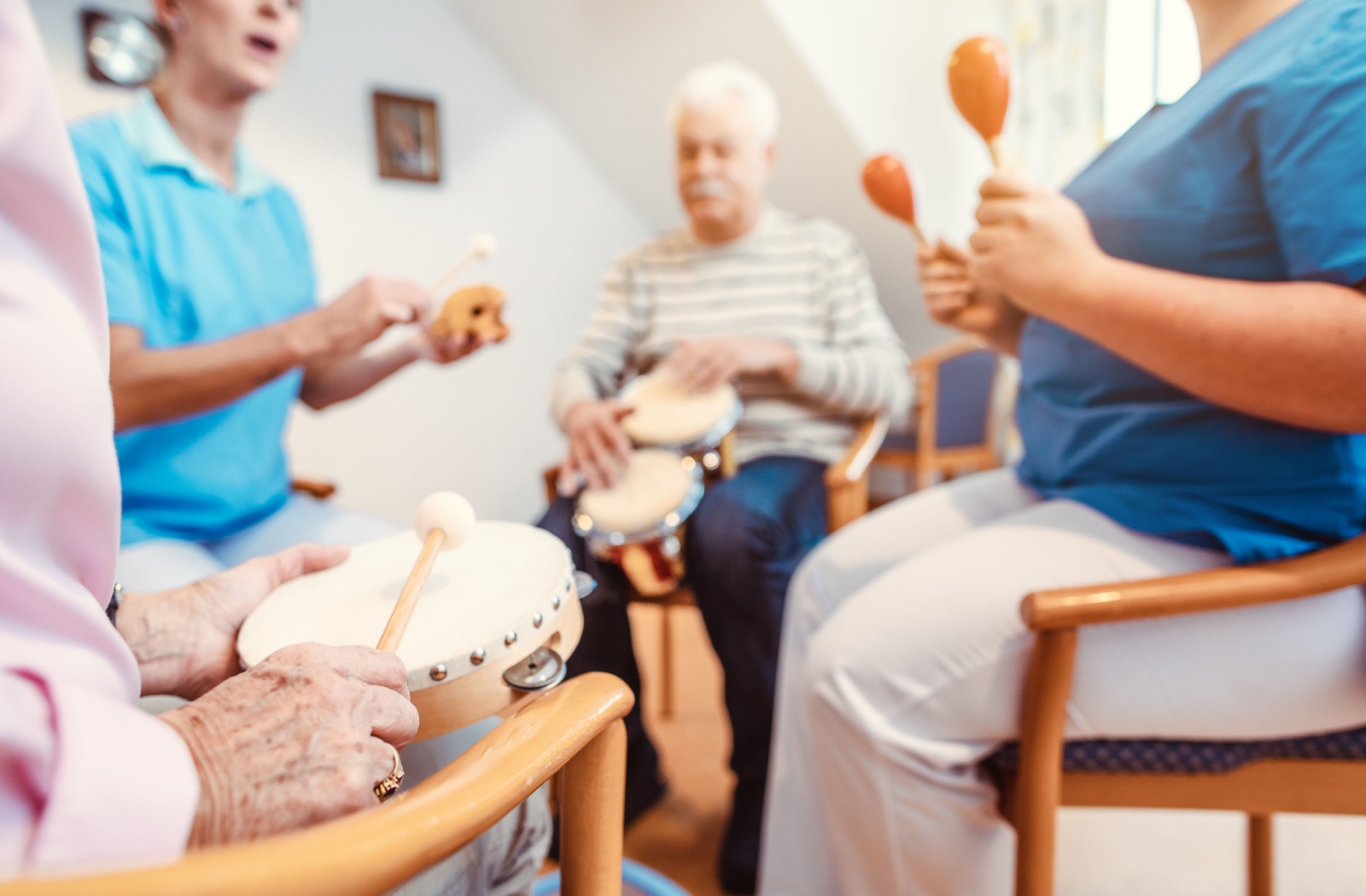
In practice, music therapy may include singing, listening to familiar songs, gentle movement, or using simple instruments. However, these activities aren’t about performance. They’re about creating a space where people can express themselves in ways that feel natural.
What Music Therapy Offers for People with Dementia
Music often reaches people in ways that spoken language no longer can. A person who struggles to recall recent events may still tap their foot to a familiar tune or hum along without effort. These responses can create moments of comfort, especially during parts of the day that feel confusing or overwhelming.
Familiar songs help reduce restlessness or anxiety by providing something recognizable and steady. Music can also offer an outlet for expression when communication becomes more challenging. Meanwhile, activities like clapping, humming, and swaying let people connect and enjoy their favorite songs. These are meaningful moments of connection and joy.
Music Therapy and Memory Care
In a memory care setting, team members use activities like music therapy intentionally throughout the day. Tessions may be offered in small groups or individually, depending on each resident’s comfort level. Every activity is adapted to different cognitive abilities so that no one feels pressured to perform or keep up.
Some popular approaches to music therapy include:
- Listening sessions that feature familiar songs from a resident’s preferred era or genre
- Group singing circles where residents can participate at their own pace
- Simple rhythm instruments, such as maracas or hand drums, used for light engagement
- Gentle movement activities set to calming or uplifting music
- Background music during meals or social gatherings to help create a relaxed atmosphere
These activities are woven into everyday routines to help create moments of connection, set a steady rhythm for the day, and offer residents a familiar, comforting form of engagement.

The Benefits of Music Therapy for Someone with Dementia
Families often notice subtle changes when music becomes part of a loved one’s regular routine. Music can serve as a familiar anchor during transitions, support calmer moments throughout the day, and create opportunities for shared connection.
- Calmer transitions during morning or evening routines
- Reduced restlessness or agitation during challenging times of day
- Increased willingness to participate in activities
- Occasional moments of recognition during familiar songs
- Gentle physical engagement through tapping, swaying, or light movement
- A relaxed atmosphere that can help support overall comfort
While responses vary from person to person, music often becomes a steady source of reassurance.
How Memory Care Activities Help People with Dementia
Music therapy is just one part of a broader approach to engagement in memory care. Daily activities are designed to offer structure, reduce uncertainty, and support familiar patterns that help residents feel more secure. These experiences are tailored to meet people where they are, without rushing or overwhelming them.
So, memory care communities like ours offer activities such as:
- Music therapy
- Art and creative expression
- Gentle movement or fitness programs
- Reminiscence-based activities
- Sensory engagement
- Small-group social opportunities
- Purposeful daily routines
- Community events
Together, these activities form a supportive framework that helps residents feel grounded.
Music Therapy, Engaging Programs, Professional Support, and More
At Somerby Santa Rosa Beach, music therapy is one of many ways we support people living with dementia through thoughtful, steady experiences. We use music, structured activities, and familiar routines to create an environment that feels reassuring and approachable.
Here, life is about connection, because that’s what your loved one deserves. Our memory care approach centers on understanding each person and offering opportunities for connection throughout the day. To learn more about our approach to caring for your loved one, schedule a visit with us today.